Thursday, March 7, 2013

(Dis)abusing the beret

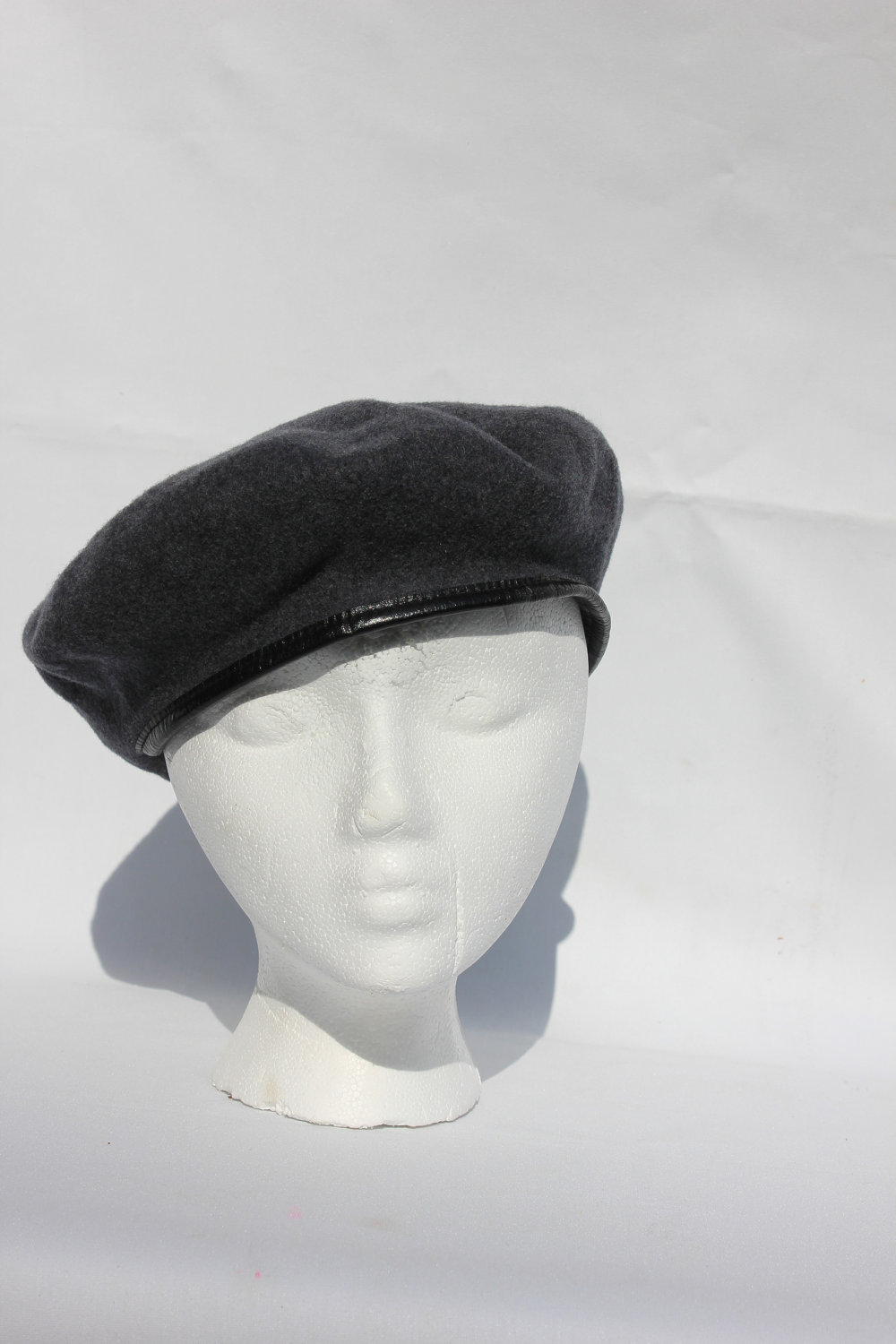
I have a beret emblazoned on its wide, flat side with “Roman Magnus,” one of those abominations of taste among well-meaning gift-givers that I forgive in good faith, like the clothing messiah I am. I’ve occasionally used it to prove the point that berets are good, clean fun any way they are worn, but they don’t actually invest anyone with artistry nor Communist inclinations.

Image Source: etsy.com


As an American, I have less use for berets than a Mexican sombrero. In my days as a traveling youth in Europe I purloined one off the streets of Paris. Someone had left it on the edge of the fountain at the Jardin des Tuileries. I flipped it over my head in jest, and my tour guide later remarked I looked like a real European then. Another myth, by the way. A beret does not a European make, even though for a time it had been worn by peasants, warrior classes, aristocracies, and artisans in many places in Europe, particularly France and Spain. I don’t remember speaking better French then.

Image Source: telegraph.co.uk


A beret these days is no more of a status marker than a fashion statement among men and women. David Beckham wears the slouchy, knit types and the acrylic fiber Parisians. Hugh Jackman and his theatre credentials tee off the look perfectly. Pedestrian New Yorkers are owning the look in equal measure. It stands for something and yet not --- it’s just old-hat, but it’s well-loved.

Image Source: yanidel.com


Berets are good for keeping from cold drafts, going incognito, and hiding bald spots. I make them as adjuncts to certain types of suits. A dapper friend of mine, Guillaume, palpated the look in horror and remarked that I was giving Europe back to the all-too-well-dressed elite. Mad hat assumption.

My berets hang out as genuine American citizens in my Roman Magnus Palatine, IL atelier. I see quite a number of people going around with them in San Francisco. To order from me, reach me through this Twitter page.

Tuesday, February 12, 2013

Watching Les Misérables: The 1832 rebellion is child's play, or blissful ignorance

Even fans of the cinema and theatre franchise mistakenly assume that Les Misérables is about the French revolution from 1789 to 1799. This is forgivable, given that the real subject matter, the June rebellion of 1832 in Paris, was also an attempt to overthrow a monarchy and its ideals and abuses.

Image Source: gotoricks.blogspot.com


The latter event was instigated by adherents of Republicanism in Paris, intellectuals which included Victor Hugo, a prominent ideologue. However, the easy confusion between the French Revolution --- the effects of which were more lasting and global --- and the June rebellion of 1832 typifies French social and political landscapes.

Image Source: thefunambulistdotnet.files.wordpress.com


 The French Revolution of 1789 led to the decapitation of absolute monarchy. The execution of King Louis XVI and some members of his royal court was unforeseen worldwide. The left-wing revolts that made this possible had both the support of countryside peasants and Republican aristocrats. The new order, established by the empowered bourgeoisie, did not take more than a quarter of a century to dismantle. Napoleon rose from his experience during the French revolution, expanded the French empire, was exiled and overthrown, and was eventually restored to power. So went on a sporadic chain of ineffectual monarchies until Paris had to revolt against them again in 1832.

Image Source: thisdaythen.blogspot.com


These basic historical tidbits were made known to me by a French exchange student in town to check out my tailoring shop, Roman Magnus Palatine IL, where the subject of conversation naturally fell to the thrill of the new Les Misérables adaptation. As expected of a Frenchman, he was underwhelmed by the Hollywood patina but approving of Tom Hooper. Meanwhile I had an intellectual image to protect and pretended I wasn’t just humming a tune and … oh might as well know my Les Mis.

My atelier, which I baptized Roman Magnus Palatine IL (too many personal references on that one, go figure), is my personal bric-a-brac. I go there to read, be a tailor, and most of all, rattle the stuff that figure in my blog.

Tuesday, January 22, 2013

Saving Luang Prabang

So I keep traveling with my anthropologist friend, who had to lock herself up in a cabin in Luang Prabang to finish her dissertation. Her thesis had nothing to do with the place nor with the Lao peoples but she could do well to tackle those. The whole place is looking to be led to an alarming state of degradation.

Image Source: enjoytravelvietnam.com


Westerners have been settling quite comfortably there. In part, that accounts for the modern mélange of traditional and Western architecture. As a UNESCO World Heritage site, it’s expected to welcome a deluge of tourists, all re-done in Orientalist fashion: native skirts with Western tank tops, messenger bags of Lao weave.

Image Source: autocarhire.com


The food, as usual, is superb, and in that regard, we were relieved to be rid of fusion. I was particularly pleased with the congee from Le Petit Nid; it was like a thick bouillon of sticky rice and chicken with trademark herbs. Variations on the papaya salad abound. This salad is normally a Vietnamese or Thai expectation, but the Lao like to toss it in thick fermented fish sauce and chili.

Image Source: news.destination-asia.com


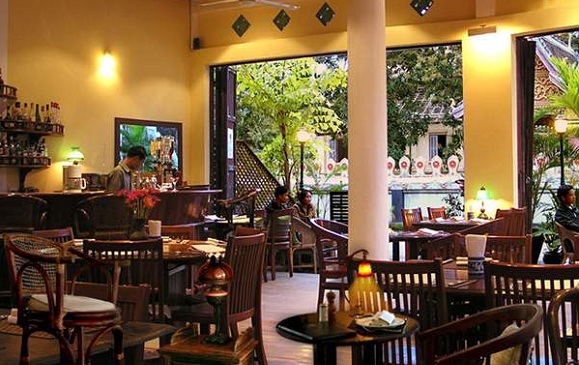
I also encountered a few good French restaurants here and there. L’elephant is a bit more highbrow, welcoming expat crowds. Some continental-style cafes are situated within market compounds, easily conjured by sweeping couches and cushions in between shops. While my friend wrote like a demon, I gazed out from a coffee shop and waited for real elephants to trundle by. Something that occurs quite often, I was told.

I guess I am going back in less than a couple of years before they attempt to build a commercial complex there. Then we boycott it until they close it off to all tourists, like Tibet.

Hi, I’m Roman Magnus, a small-time tailor from San Francisco blogging with all the free time I have. Follow me on Facebook.

Thursday, December 20, 2012

A Tribute to Paul Poiret

I, Roman Magnus, reserve a special place in my grotto of idolized designers for Paul Poiret, a belle époque figure whose influence had been surpassed by Coco Chanel, but who deserves a starting tailor’s wistful homage then.

Image credit: oldfashionedpretty.com

I have such sentimentality over this figure for several reasons. He had grown up with cloth in his hands, as his father was a cloth merchant. He was of the mercantile classes who had artisanal wits about them, and he had been given to an umbrella maker as apprentice. Romantically speaking, Poiret had been placed in the natural milieu for cultivating one of France’s earliest, most striking designers.

Image credit: forumparaamoda.wordpress.com

The comparisons with Chanel are a trifle unfair, albeit understandable. They intersected eras, but it was Coco who would, eventually, triumph in terms of the consistent quality with which her modern designs were rendered. Meanwhile, Poiret was no less a visionary. The kimono cut, undeniably attributed to him and his earliest sketches, was initially an aristocratic befuddlement. As with all great artists, he suffered rejection for ideas that outpaced acceptance.

Image credit: myfashionsnack.blogspot.com

But if he had been born today he would have held all contemporary designers in line with his range of ideas. House of McQueen had a collection that seemed to harken back to the Poiret red cape. Raf Simons of Dior wouldn’t have wasted a thought adopting the Poiret silhouette --- and no doubt even the house of Chanel would, in a lingering flashback.

Read more about arts, history, and fashion at this website.

Tuesday, November 6, 2012

Roman Magnus: Diolacton


I couldn’t have bothered with the word, though it’s made its way through the Roman Magnus vocabulary pretty easily. Some books give you a sense of knowing and accepting ideas with an easy slide. Mine’s The Quiet American by Graham Greene, possibly the most un-spy novel of all time. I’ve worked out how much I love the book: it’s been translated to French, is backdropped by the French-Communist war in Vietnam, been turned into a film with Michael Cain in the lead role, and condemns American foreign policy.

Roman Magnus Image Credit: cdn2.paulhackett.ca


Few historians are forthcoming about America’s real role in French-conquered Indochina. The quiet American is Alden Pyle, an eye doctor deployed in Vietnam on a mission of economic and medical aid. If this spoiler is worth anything, he was also sent out on a fatal bombing mission in Hanoi, aided by a chemical called Diolacton.

My Roman Magnus vocabulary usually precludes the scientific, but it’s easy to succumb to the recall. The novel’s hero, an aging expatriate reporter named Fowler, makes a discovery of it and unravels the real identity of Alden Pyle. The man had the subterranean work of stirring chaos in an Asian country like a common mercenary.

Roman Magnus Image Credit: 366filmsin2012.files.wordpress.com


My travels to Vietnam have taken me far and wide in perspective about Western interventionism and imperialism. During my last visit to Con Dao Island, the official concentration camp during the French occupation, I walked into the horrors of the torture chambers where prisoners were bound to each other and repeatedly threatened to be fed to tigers.

Roman Magnus Image Credit: wetherbee112.files.wordpress.com


I also took time to stroll Rue Catinat in Saigon, passing through the modernized version of the Hotel Continental, where the bombing in the novel took place. I sometimes fear Vietnam’s industrial transitions cast the morbid shades of history away from local people’s consciousness.

See more of the Roman Magnus book list on his Facebook page.

Friday, October 12, 2012

In his spare time, Roman Magnus shoots darts into fabric

Roman Magnus Image Credit: msdianekennedy.files.wordpress.com


I, Roman Magnus, am not limited to the masculine plane for clothing drafts. A number of female friends have given me the challenge to create clothes for them, and I have obliged them the way Paul Smith has adopted his retail lines to the fairer sex.


The task is more technical, because the topography of the female body demands a more circuitous manner of creating clothes. As it is, men are already sensitive to fittings. The female form is even more delicate. But even amateur tailors could learn from the textbooks, and even instructional blogs.


Roman Magnus Image Credit: img.ehowcdn.com


The key here is working with non-stretch fabric, which, for today’s more informal cuts, could get away with skipping modeling. I, Roman Magnus, recommend modeling for starting tailors to allow them to get creative with patterns. Modeling is molding the fabric into the actual form to generate a pattern. It’s not as simple as it looks. Representing the cuts and folds of fabric on flat paper requires precise geometry and measurements.


For feminine form-fitting dresses, curves are accommodated through “darts,” or those triangular grooves embedded in a pattern that represent the fold of the fabric. These darts are usually cut out from the bust area, or the part of the waist where the body starts to slope.


Roman Magnus Image Credit: 0.tqn.com


Darts are magically powerful because they determine the manner the fabric falls or encloses the body. A straight, A-line skirt could be transformed into a serpentine one with multiple dart insertions, and it’s a bit of a mathematical and design challenge for the tailor to figure out their angles and points of origin.  


 Roman Magnus is a tailor residing in San Francisco, California. For more updates about him, visit his Facebook page.

Wednesday, September 26, 2012

Roman Magnus does not knit

Roman Magnus Image Credit: nfs.stvfiles.com


Knitwear is noble clothing, but the Roman Magnus atelier has yet to admit that, with the passing of brocade as a fall and winter fixture, low-key knits have ruled the gray months since. The yarns spun by threadfolk about the benefits of knitting in the hibernation months are interesting, and so are the fireplace tales that go along with them, though the resulting sweaters with reindeer patterns are no better served by the hobby’s cozy features.


Tailoring is mainly leaning into a forge of fairy dust. Much like in blacksmithing, the sweaty brow and the set jaw are further strained by trade scruples like unwieldy material. Cloth and metal are malleable goods, but they are not always obedient. Tailoring the Roman Magnus way is plotted in a sweltering toolshed, amid a somber, studious mood, which, by all accounts, is not a pleasant atmosphere for chitchat. Knitting’s place in this setting cannot hold.


Roman Magnus Image Credit: lavaink.co.za


The other sorry aspects of knitwear are proportional to the stocks, that is, the forgotten, woolly crumple at the bottom of the closet that doesn’t even charm its owner. Outside, the aesthetic and functional value of knitwear does not rise with the pile of snow or the length of sleet. I would suggest a fully-armored coat for the occasion of freezing one’s limbs off for a trip to the baker.


I say this because I get some orders for knit scarves, and with the forthcoming nature I flatter myself having, it always breaks my heart to refuse potential clients.


Roman Magnus Image Credit: wonderofchildren.files.wordpress.com


Roman Magnus fancies himself the gritty clothesmith. His blog talks at length about this hobby-turned-profession. Read his workshop thoughts in this Facebook page.